
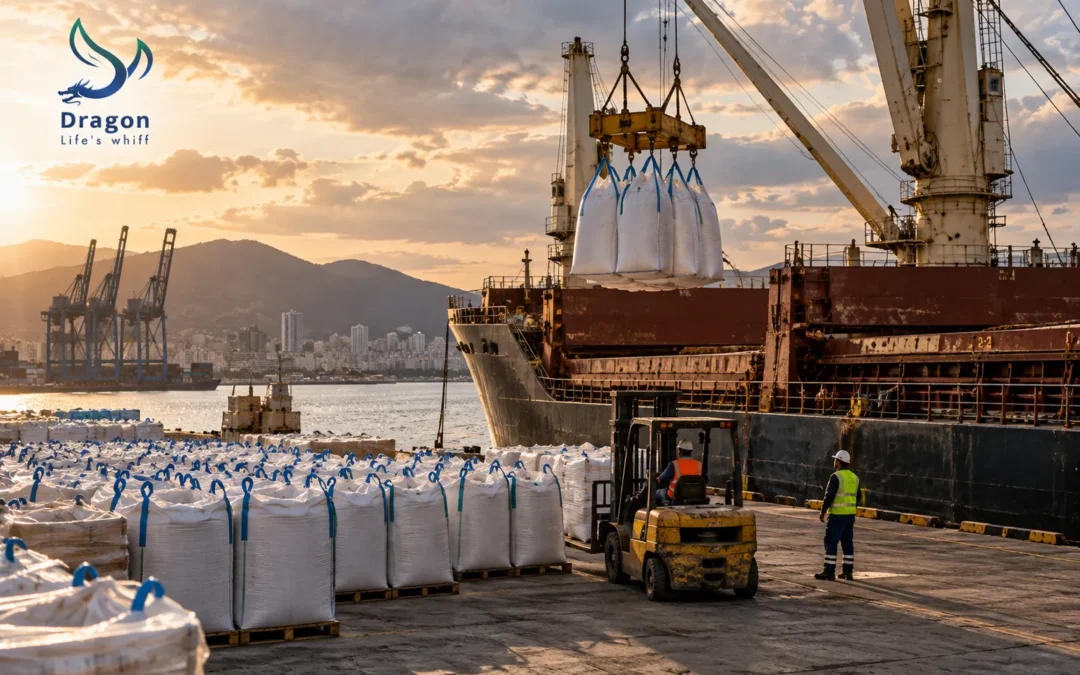
Colombia buys almost all of its fertilizer from abroad. Industry figures put imports at around 2.3 million tonnes a year against consumption of roughly 2.4 to 2.5 million, and the country produces no urea of its own. Urea is its single most imported fertilizer, with around 666,000 tonnes worth about 295 million dollars brought in over a recent twelve-month period, according to figures reported by La Republica.
That dependence makes Colombian farmers exposed to whatever happens in the world market, and the market has been turbulent. Bancolombia’s research team reported that average urea prices rose about 25 per cent during 2025, driven by higher natural gas costs and Chinese export restrictions. In April 2026, with shipping through the Strait of Hormuz disrupted, Colombian press reported fertilizer prices up around 50 per cent on a year earlier, with the reference urea price up by 60 per cent or more.
Prices will have moved since then, and they will keep moving. This guide does not try to predict them. It deals with the part a farmer can control: how much of the nitrogen they pay for actually ends up in the crop.
Why the price moves so much
Understanding what drives the price helps explain why it swings.
Natural gas. Urea is made from ammonia, and ammonia is made using natural gas as both feedstock and fuel. When gas prices rise, urea follows.
Export restrictions. China, a major producer, has restricted fertilizer exports at its discretion, removing supply from the world market without much warning.
Conflict and shipping routes. Russia is a major nitrogen exporter, and war has complicated its logistics. A large share of world fertilizer trade passes through the Strait of Hormuz, so disruption there reaches Colombian farms quickly.
Freight. Colombia imports by sea, and freight costs rise and fall with global shipping conditions.
None of these are in a farmer’s hands. The next section is.
Where the nitrogen goes
Nitrogen applied to a field does not all reach the crop. Some is lost before the plant can take it up. When nitrogen is cheap, those losses are an inefficiency. When it is expensive, they are money disappearing into the air and the groundwater.
Lost to the air as ammonia (volatilisation). Urea spread on the soil surface converts to ammonia gas. If it sits on the surface in warm conditions, especially on moist soil that then dries, a substantial share can escape before rain or irrigation carries it into the soil. This is the main avoidable loss with surface-applied urea.
Washed down past the roots (leaching). Once urea converts to nitrate, it moves with water. Heavy rain on sandy or free-draining soil carries nitrate below the root zone, where the crop cannot reach it.
Lost to the air as nitrogen gas (denitrification). In waterlogged soil, bacteria convert nitrate to gas. Fields that flood or stay saturated after heavy rain lose nitrogen this way.
Taken up but not used. A crop short of another nutrient cannot use the nitrogen it absorbs. Sulphur is the classic case, because the plant needs it to turn nitrogen into protein. Potassium, magnesium and phosphorus shortages limit the response too.
Every one of these can be reduced.
Before you buy the next bag: a checklist
- Test the soil. A soil test tells you how much nitrogen the crop is likely to need and whether another nutrient is limiting it. Buying nitrogen for a crop held back by potassium or sulphur shortage is buying something the crop cannot use.
- Check what else is short. If sulphur is low, correcting it can raise the return on the nitrogen already being applied. The mechanism is explained in the guide to sulphur deficiency, which applies well beyond India.
- Get urea into the soil. Incorporating urea, applying it just before rain or irrigation, or placing it below the surface cuts ammonia losses sharply compared with leaving it on top.
- Split the dose. Several smaller applications timed to crop demand lose less than one large dose applied before the crop can use it. The crop takes up most of its nitrogen during active growth, not at planting.
- Match timing to the crop, not the calendar. Nitrogen applied when the crop is not growing is exposed to loss for longer. Some crops make the point sharply: asparagus in Peru is fed after harvest, while the fern refills the crown, and feeding during forced dormancy is largely wasted.
- Avoid applying before heavy rain on free-draining soil. That is the fastest way to send nitrate below the roots.
- Mind the soil acidity. Ammonium and urea acidify soil as they convert, and much Colombian soil is already acidic. Over time, heavy urea use on acid soil makes the acidity problem worse, which in turn reduces the availability of other nutrients. The guide to acid soils and aluminium in Colombia covers how to manage it.
- Do not cut potassium to pay for nitrogen. Potassium chloride prices rose too, and it is tempting to trim it. But a crop short of potassium responds poorly to nitrogen, so cutting one can waste the other.
Should you switch away from urea?
For most field crops, no, and it would be dishonest to suggest otherwise.
Urea is usually the cheapest source of nitrogen per kilogram of nutrient, even at high prices, and specialty nitrogen products generally cost more per unit of nitrogen. For pasture, maize, rice and similar crops, the best response to expensive urea is almost always to use it more efficiently, following the checklist above, rather than to replace it.
The picture is different on high-value crops where precision pays. On a fertigated Hass avocado orchard, a flower farm or a gulupa plantation growing for Europe, nitrogen delivered exactly when and where the crop needs it, through the drip line or as a foliar spray, loses far less than surface-applied urea. There the higher cost per kilogram of nitrogen can be outweighed by what is not wasted and by the value of the crop. Dragon Triple N supplies nitrogen in three forms for fertigation and foliar use, and the Dragon Paste and Dragon Fert soluble powder lines combine nitrogen with other nutrients for precise feeding. The economics are laid out in the guide to specialty fertilizer return on investment.
The honest rule is simple. Use urea efficiently on low-value crops, and use precision where the crop is valuable enough to justify it.
The nitrogen form matters for some crops
Not all nitrogen behaves the same once it is in the soil, and some crops care which form they get.
Blueberry prefers ammonium, as explained in the guide to blueberry fertilization in Chile. Banana grown where Fusarium wilt is a concern benefits from a higher share of nitrate, as covered in the guide to banana after Fusarium TR4. For most crops the form matters less than the timing and placement, but for these it is worth getting right.
Reading what you buy
When prices rise, so does the temptation to buy on price alone. It is worth checking what a product actually contains, including its real nutrient content and whether it carries chloride, sodium or heavy metals you did not intend to add. The guide to reading a fertilizer label explains what to look for. Every Dragon Ferti product is free of chloride, sodium and heavy metals, and comes with a Certificate of Analysis.
What this means for a distributor
When urea is expensive, farmers come to the counter worried and looking for a way to spend less. The dealer who helps them spend smarter, by testing the soil, fixing the nutrient that is actually limiting, splitting and incorporating urea, and reserving precision products for crops that justify them, earns more trust than one who simply sells a substitute.
When every peso on inputs counts, knowing exactly what is in the bag matters, which is why Dragon Ferti ships each product with a Certificate of Analysis, Technical Data Sheet, Safety Data Sheet and Free Sale Certificate, made under ISO 9001, ISO 14001 and ISO 45001 certified management systems.
Conclusion
Colombia imports nearly all its fertilizer and all of its urea, so world events set the price a Colombian farmer pays. That part cannot be controlled. How much of the purchased nitrogen reaches the crop can. Test the soil, fix the nutrient that is limiting, get urea into the soil, split applications to match crop demand, protect against acidification, and keep potassium in the programme. Keep urea for the crops where it is the economical choice, and use precision where the crop’s value justifies it. If you want help deciding where precision nitrogen pays on your crops, look through the Dragon Ferti range or ask the export team directly through the contact page.
Frequently asked questions
Why is urea so expensive in Colombia?
Colombia produces no urea and imports all of it, so its price follows the world market. That market is driven by natural gas costs, Chinese export restrictions, conflict affecting major exporters, disruption to shipping routes such as the Strait of Hormuz, and freight costs.
How can I reduce nitrogen losses from urea?
Incorporate urea into the soil or apply it just before rain or irrigation to cut ammonia losses, split it into several smaller doses timed to crop demand, avoid applying it before heavy rain on free-draining soil, and correct any other nutrient shortage that would stop the crop using it.
Should I replace urea with another nitrogen fertilizer?
For most field crops, no. Urea is usually the cheapest nitrogen per kilogram even at high prices, so using it more efficiently is the better response. On high-value fertigated or export crops, precision nitrogen products can pay for themselves through lower losses and higher crop value.
Does sulphur help the crop use nitrogen?
Yes. Plants need sulphur to convert absorbed nitrogen into protein, so a sulphur-deficient crop cannot use all the nitrogen it takes up. Correcting sulphur can improve the return on nitrogen already being applied.
Does urea make soil more acidic?
Yes. Urea and ammonium fertilizers acidify soil as they convert in the soil. On soils that are already acidic, as much Colombian farmland is, long-term heavy use can worsen acidity and reduce the availability of other nutrients.