
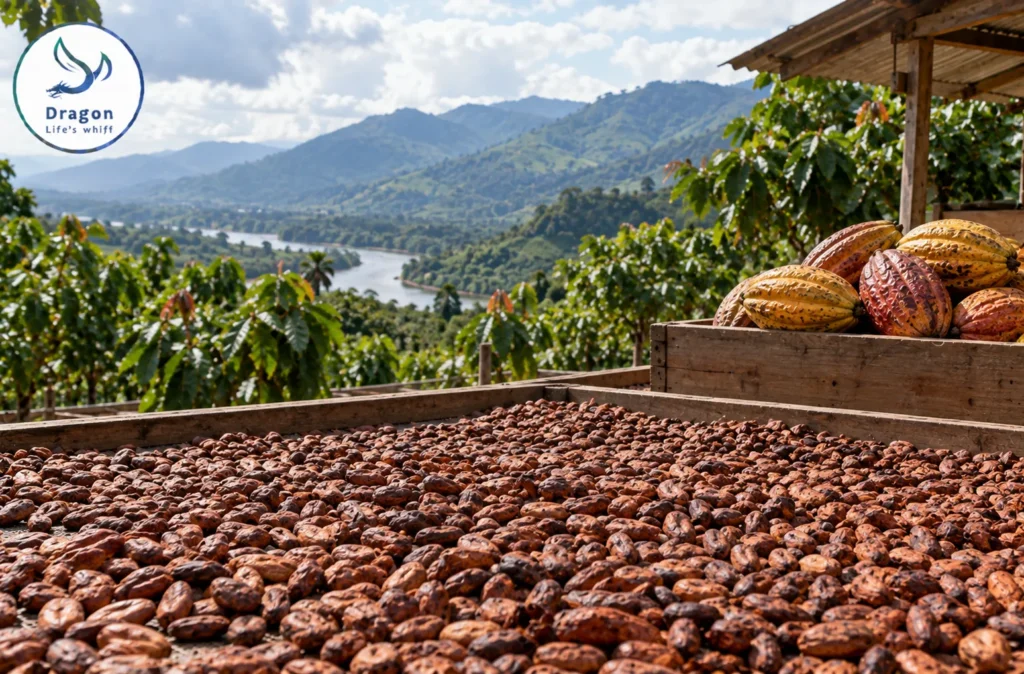
A cacao buyer tells a cooperative that its beans are too high in cadmium for Europe. The beans test at 0.9 mg per kilogram. The buyer is working to a limit of 0.6.
The buyer may be wrong.
That scenario plays out often enough across the Andean cacao belt that researchers at the Alliance of Bioversity International and CIAT built an online tool specifically to correct it. The European limits exist, they are enforced, and cadmium is a real issue for cacao from Ecuador, Peru and Colombia. But the numbers are widely misapplied, and a misapplied number can cost a farmer a sale they should have made.
This guide separates what the rules say from what people think they say, then looks at what actually reduces cadmium in the bean.
First, where the cadmium comes from
Cadmium is a heavy metal that occurs naturally in soils. In the Andean region it is associated with volcanic parent material and the geology of particular valleys, which is why levels vary so much from one district to the next, and even between neighbouring farms.
The cacao tree takes cadmium up through its roots along with other elements and moves some of it into the bean. It is not a sign of pollution or poor farming. A carefully managed organic farm on the wrong soil can produce high-cadmium beans, and a conventional farm on the right soil can produce low ones.
Fertilizer can add to it. Some phosphate fertilizers carry cadmium from the phosphate rock they are made from. In the Andes that is usually a smaller contribution than the geology, but it is the one part of the problem a grower controls completely.
What the EU regulation actually sets
The limits sit in Regulation (EU) 2023/915, which replaced the earlier Regulation 1881/2006 in 2023. Cadmium limits for cocoa products have applied since 2019.
| Product | Maximum cadmium level |
|---|---|
| Milk chocolate under 30 per cent total dry cocoa solids | 0.10 mg/kg |
| Chocolate over 50 per cent total dry cocoa solids | 0.80 mg/kg |
| Cocoa powder sold to the final consumer | 0.60 mg/kg |
Other chocolate categories sit between these. Look at the first column carefully: every one of these is a finished product. None of them is a cacao bean.
The misreading that costs sales
The limits apply to chocolate and cocoa powder as sold, not to raw beans.
A chocolate bar is not made of beans alone. It contains sugar, cocoa butter, milk solids and other ingredients that dilute the cadmium present in the cacao. So a bean can carry more cadmium than the limit for the finished product and still produce a compliant bar.
CIAT gives a worked example. A 70 per cent dark chocolate bar has a limit of 0.8 mg/kg. Working backwards through the recipe, the cacao used to make it can carry around 1.1 mg/kg and the bar still complies. Their researchers also note that nibs above 1.2 mg/kg can be used safely in a 50 to 60 per cent chocolate.
The mistake they describe is buyers applying a figure of 0.3 to 0.6 mg/kg directly to raw beans, as if the bean were the finished product. That turns away cacao that would have made compliant chocolate.
Two more details matter for anyone sending samples:
The shell carries more than the nib. Bean husks and shells often contain more cadmium than the interior. Testing peeled beans gives a figure more representative of what goes into chocolate.
Lots can be blended. Chocolate makers routinely blend beans from different origins and lots, which is one of the ways the industry meets the limits while still buying from higher-cadmium regions. The European Commission's own guidance on cadmium in chocolate notes this.
None of this makes cadmium irrelevant. High enough levels will still exclude cacao from some uses and some buyers, and powder, where cacao is concentrated, is the hardest product to comply with. But the right question is "what will this cacao be made into?", not "is this bean under 0.6?"
What reduces cadmium in the bean
The evidence here is uneven, so it helps to rank the measures honestly.
Better supported:
- Raising soil pH. Cadmium is more available to roots in acidic soil. Liming acidic plantation soils toward a less acidic range is the most consistently reported soil measure for reducing uptake. It also helps with the aluminium toxicity many Andean soils carry, covered in the guide to acid soils and liming.
- Increasing soil organic matter. Organic matter binds cadmium and reduces the share available to the root. Compost, returned pod husks and organic amendments all contribute.
- Mapping before planting. Because cadmium varies so sharply by location, testing soil before establishing a new block is the cheapest intervention available. It is far easier to plant on low-cadmium ground than to lower cadmium in an established plantation.
Promising but less certain:
- Zinc nutrition. Zinc and cadmium are chemically similar and can compete at the root. Correcting zinc deficiency is good practice regardless, and some work suggests it may reduce cadmium uptake, but results vary and it should not be relied on alone. Dragon Zinc corrects a confirmed shortage.
- Biochar and other amendments. These are under active research in the region, with mixed results depending on soil and material.
Always worth doing:
- Not adding more. Fertilizers made from contaminated raw material can add cadmium to soil year after year. Every product Dragon Ferti manufactures is free of chloride, sodium and heavy metals, with raw materials sourced from Jordanian potash and phosphate reserves. On a farm already dealing with geological cadmium, the inputs should not be making it worse.
A practical sequence for a cooperative or exporter
- Test the soil across representative blocks, including pH, organic matter and cadmium, before making any promises to buyers.
- Test peeled beans, not whole beans, so the figure reflects what enters the chocolate.
- Ask the buyer what the cacao is for. A dark chocolate maker and a cocoa powder processor are working to very different effective limits.
- Use the CIAT calculation to translate the finished-product limit into a bean limit for that recipe, rather than applying a finished-product figure to raw cacao.
- Manage soil pH and organic matter on blocks with elevated readings, and keep heavy metals out of the fertilizer programme.
- Consider segregation. Keeping low-cadmium lots separate from high-cadmium ones lets each be sold to the buyer whose recipe suits it.
Where this fits with cacao nutrition
Cadmium management and good cacao nutrition point the same way. Correcting soil acidity improves calcium, magnesium and phosphorus availability as well as reducing cadmium uptake. Building organic matter improves soil structure and water holding as well as binding metals. Clean inputs are simply better inputs.
The full nutrition side, including how Nacional and CCN-51 need different programmes, is covered in the guide to cacao fertilization in Ecuador. Colombian growers working in volcanic soils will also find the coffee fertilization guide for Colombia useful on the soil chemistry.
Conclusion
Cadmium in Andean cacao is real, largely geological, and regulated in Europe through limits on finished chocolate and cocoa powder rather than on beans. Reading those limits correctly can keep sales that would otherwise be lost. Reducing cadmium in the field comes down mainly to soil pH, organic matter, careful site selection and not adding more through contaminated inputs. For specifications, heavy-metal-free product documentation or distribution enquiries, see the Dragon Ferti range or contact the export team through the contact page.
Frequently asked questions
What is the EU limit for cadmium in cacao beans?
The EU does not set a limit on raw cacao beans. Regulation (EU) 2023/915 sets maximum cadmium levels for chocolate and cocoa products, for example 0.80 mg/kg for chocolate above 50 per cent cocoa solids and 0.60 mg/kg for cocoa powder sold to consumers. The acceptable level in beans depends on the recipe they will be used in.
Can beans above 0.6 mg/kg cadmium be sold to Europe?
Often, yes. Because other ingredients dilute cadmium in finished chocolate, beans can carry more than the product limit and still produce compliant chocolate. CIAT's example shows cacao at about 1.1 mg/kg making a compliant 70 per cent bar. Suitability depends on the end product, with cocoa powder being the most demanding.
Why is cadmium high in cacao from Ecuador, Peru and Colombia?
Mainly because of the natural geology of parts of the Andean region, where soils derived from volcanic and other parent materials contain cadmium. The tree takes it up from the soil. It varies sharply between locations and is not in itself a sign of poor farming.
Does liming reduce cadmium in cacao?
Raising the pH of acidic soils is the most consistently reported soil measure for reducing cadmium uptake, because cadmium is more available to roots in acidic conditions. It also improves the availability of calcium, magnesium and phosphorus. Results depend on soil type and should be monitored with testing.
Can fertilizers add cadmium to the soil?
Yes. Some phosphate fertilizers contain cadmium from the phosphate rock used to make them. In the Andes this is generally a smaller source than natural geology, but it is fully under the grower's control, which makes choosing heavy-metal-free fertilizers a straightforward precaution.


Looking for a reliable specialty fertilizer partner?
We work with importers and distributors who want products that set their portfolio apart.