
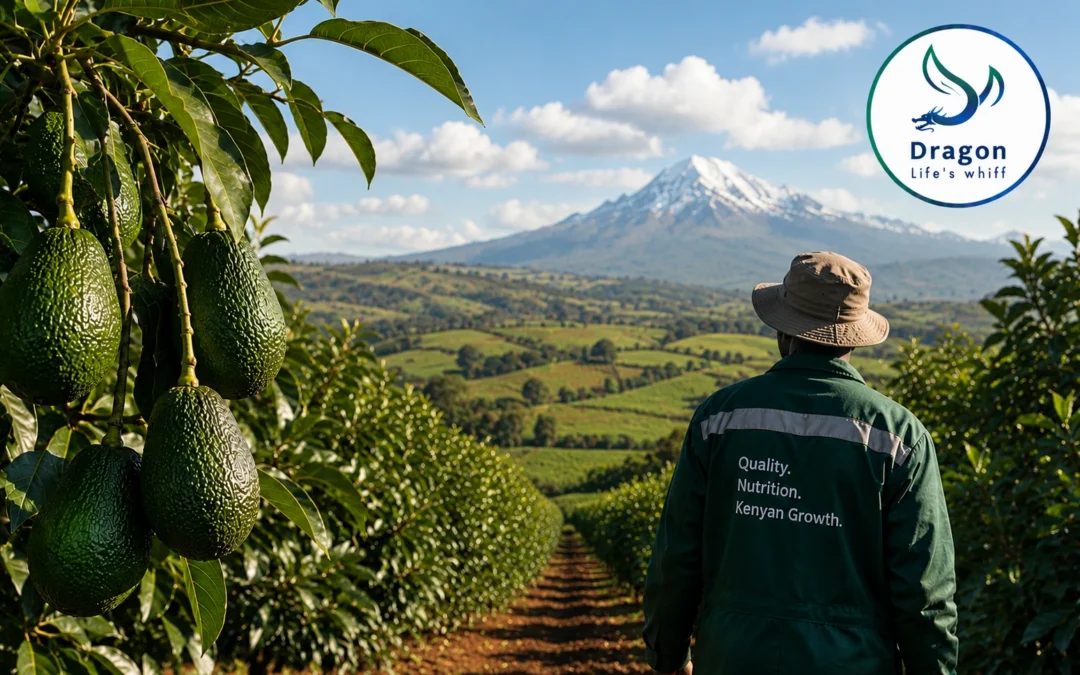
A Kenyan avocado consignment can fail before it leaves the country, and the reason is often a single number on an inspector’s report. Dry matter content. Fruit that tests below the threshold for its variety does not clear for export, and a grower who harvests early risks losing a licence rather than just a load.
Most growers treat that as a harvest-timing problem. It is really a nutrition problem, decided months before anyone picks.
What dry matter actually measures
Dry matter is the share of the fruit that is not water. In avocado, that solid fraction is mostly oil, and oil accumulates steadily through the season as the fruit matures on the tree. Inspectors use it because it is the one reliable proxy for maturity in a fruit that does not soften or change colour until after picking.
It is worth separating two things growers often merge:
| Dry matter | Ripeness | |
|---|---|---|
| When it develops | On the tree, over months | After harvest, off the tree |
| What drives it | Oil accumulation, fed by potassium and season length | Ethylene and time |
| Can it be fixed later | No | Yes, with controlled ripening |
| Who checks it | The inspector, before export | The buyer, at retail |
That first column is the one nutrition controls. Once fruit is off the tree, its dry matter is fixed forever.
Potassium is the lever
Oil accumulation runs on carbohydrate moving from leaf to fruit, and potassium is what regulates that movement. A tree short of potassium in the second half of the season carries fruit that stays watery and tests low, even if it looks the right size.
This is why the common Kenyan pattern of feeding heavily early and easing off later works against export grade. The back half of the season is exactly when dry matter is being built. Dragon Paste High Potassium and Dragon Fert High Potassium both carry the season through, and being chloride-free matters on a tree as chloride-sensitive as avocado.
Calcium buys you the journey
Kenya ships most of its avocado to Europe and the Middle East by sea, and rerouting away from the Red Sea corridor has made those voyages longer. Fruit now needs to hold firm for weeks rather than days.
Firmness is calcium loaded into the fruit cell walls during development. It cannot be added at the packhouse. Dragon PureCal supplies calcium in a form that moves through fertigation, and the rule is little and often rather than one heavy dose, because calcium only travels into fruit while the fruit is actively growing.
Set the crop before you worry about grading it
None of the above matters if the tree sets a light crop. Boron governs pollen viability and fruit retention, and Kenya’s two flowering windows mean two chances to get it right or wrong each year. Dragon BorCal covers boron and calcium together at flowering. Where highland soils lock up micronutrients, Dragon Mix Plus handles the rest of the set in one pass.
Feeding a certified organic orchard
Organic avocado earns a clear premium in European retail, and the certified share of Kenyan production is growing. The nutrition logic does not change, only the approved input list. The Dragon Organic line carries organic-compatible versions of the same products, including PureCal and BorCal, so a converting orchard keeps its programme and swaps the products.
Four steps before you harvest
- Test dry matter on sample fruit from each block, not one tree, because blocks mature at different rates.
- Check your potassium programme actually ran through the last third of the season.
- Wait. Three more weeks on the tree is cheaper than a rejected consignment.
- Keep the records. Traceability from block to consignment is now expected, and your input records are part of it.
Conclusion
Dry matter is treated as a compliance hurdle and it is really a yield-quality outcome you build over a season. Potassium through the second half, calcium for the voyage, boron at flowering, and the patience to let fruit finish. Get those right and the inspection stops being a risk. To build a programme for your orchard or your out-grower network, see the full Dragon Ferti product range or talk to the team through the contact page.
Frequently asked questions
What dry matter percentage does Kenyan avocado need for export?
The requirement varies by variety and is set by the regulator, generally in the low twenties as a percentage for Hass. Because the exact threshold is revised and enforced season by season, confirm the current figure with the Agriculture and Food Authority or your exporter before you start picking rather than relying on last season’s number.
Can I raise dry matter after harvest?
No. Dry matter is oil accumulated while the fruit is still attached to the tree, and it stops the moment you pick. Ripening changes texture and flavour but not the solid fraction. This is why harvest timing and season-long potassium nutrition are the only two things that move it.
Why is potassium more important than nitrogen for export grade?
Nitrogen builds canopy and vegetative growth, which the tree needs, but too much late in the season pushes leaf growth at the expense of fruit filling. Potassium regulates the movement of sugars into the fruit, which is what becomes oil and therefore dry matter. A season that is nitrogen-heavy and potassium-short gives you big, watery fruit that fails inspection.
Do chloride-free fertilizers really matter for avocado?
Yes, more than for most crops. Avocado is among the most chloride-sensitive commercial fruit trees, and chloride accumulates season after season from potassium chloride fertilizers until it shows as leaf scorch and reduced yield. Every Dragon Ferti product is free of chloride and sodium, so the potassium arrives without the long-term cost.