
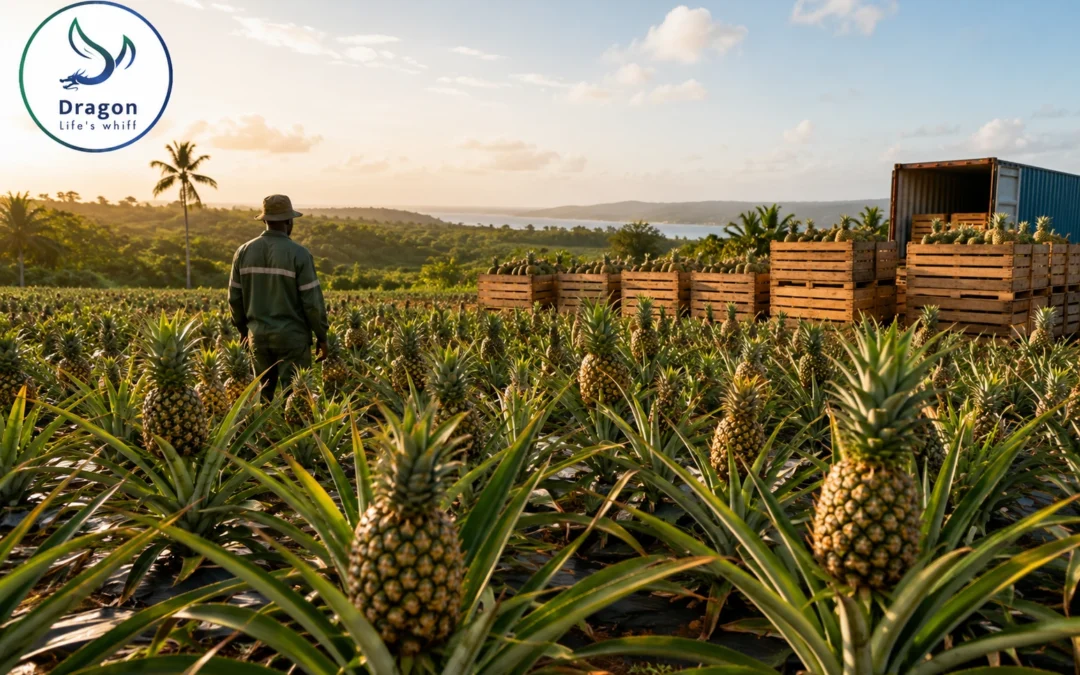
Ghana sells pineapple into Europe on a promise most origins cannot make: fruit every week of the year. Mangoes and pineapples together carry roughly two thirds of the country’s horticultural export value, and buyers in the EU and UK pay for continuity as much as for quality. Processors have built on that, and fresh-cut and juice operations command several times the price of raw fruit.
Continuity puts pressure somewhere unusual. When you are harvesting all year, there is no off-season to correct a nutrition mistake. Every block is at a different stage at the same time.
Pineapple wants more potassium than you think
Among every crop in commercial horticulture, pineapple is one of the heaviest potassium users relative to its size. Potassium sets fruit weight, sugar, acid balance and shell colour. It is the nutrient that decides whether you have export fruit or juice fruit.
The decision that matters most is not how much fertilizer you apply but the balance between nitrogen and potassium. Push nitrogen and you get a large fruit with poor sugar that fails grade. Hold potassium up through fruit development and you get size and brix together.
| Stage | Priority | Product fit |
|---|---|---|
| Establishment and early vegetative | Nitrogen with steady phosphorus, moderate rates | Dragon Fert High-PK at low rate |
| Late vegetative to forcing | Building potassium reserves before induction | Dragon Fert High Potassium |
| Fruit development | Potassium dominant, calcium continuous | Dragon Fert High Potassium with Dragon Calibo |
| Approaching harvest | Potassium held, nitrogen eased back | Dragon PotaMax |
The defect that costs consignments
Internal browning and flesh translucency are the quality problems that get pineapple rejected after it has already been paid for and shipped. The fruit looks acceptable outside and fails when cut, which is the worst possible outcome for a supplier building a reputation on consistency.
Calcium nutrition, alongside balanced potassium, is part of controlling it. Calcium builds the cell wall integrity that holds flesh structure through transit and storage. Dragon Calibo supplies calcium with boron, and Dragon NPK+CaO provides calcium alongside the NPK base where you want both in one pass.
Shell colour is a separate grading criterion and largely a magnesium story. Dragon MagiCal covers magnesium with calcium, and Dragon Thio adds potassium with sulphur where sulphur is short.
Why foliar works unusually well on pineapple
A pineapple plant is shaped like a funnel. The leaf axils hold solution rather than shedding it, so a foliar application sits against absorbing tissue instead of running to the ground. Very few crops give you that. It is why foliar feeding is standard practice in pineapple rather than a supplement to soil feeding.
This changes the practical calculation. On a crop where soil-applied nutrients leach through acidic sandy ground, being able to deliver reliably through the leaf is a real advantage, and it favours fully soluble products that dissolve completely and spray cleanly. The Dragon Fert soluble powder range is built for exactly this, and Dragon Corrector keeps tank pH where absorption is best.
Organic pineapple is a real market here
Ghana has an established organic-certified pineapple trade into Europe, and processors actively chase organic certification premiums. This is the strongest organic fit in Ghanaian horticulture, and the programme above translates directly. The Dragon Organic line carries organic-compatible Calibo, PotaMax and Corrector, so a certified block runs the same nitrogen-to-potassium logic with approved inputs.
Match the programme to the channel
Whole fresh fruit, fresh-cut and juice do not reward the same things. Whole fruit is graded heavily on shell appearance and size. Fresh-cut and juice care about internal quality and brix above all, because nobody sees the shell. If you supply a processor, weight your programme toward potassium and internal quality rather than cosmetic finish.
Conclusion
Pineapple pays for potassium and punishes excess nitrogen, and Ghana’s year-round advantage only holds if quality holds with it. Get the nitrogen-to-potassium balance right, keep calcium running through fruit development, use the plant’s own funnel shape to your advantage with foliar feeding, and match the programme to whether your fruit is sold whole or processed. See the Dragon Ferti range or contact the team through the contact page.
Frequently asked questions
What is the most important nutrient for pineapple?
Potassium, by a clear margin. It determines fruit size, sugar content, acid balance and shell colour, and pineapple removes large amounts of it relative to plant size. The practical decision is the ratio of nitrogen to potassium, because too much nitrogen gives you a big fruit with low sugar that will not make export grade.
What causes internal browning and translucency in pineapple?
Several factors contribute, including harvest timing and storage temperature, but nutrition is part of it. Calcium builds the cell wall integrity that holds flesh structure through transit, and unbalanced potassium makes the problem worse. A continuous calcium programme through fruit development reduces the incidence, though it does not replace good cold chain management.
Is foliar feeding better than soil application for pineapple?
It is unusually effective on pineapple because the leaf axils hold spray solution against absorbing tissue rather than shedding it. That makes foliar a primary delivery route rather than a supplement, which is helpful on acidic sandy soils where soil-applied nutrients leach. Most commercial programmes use both, weighted more toward foliar than in other crops.
Do Dragon Ferti products suit organic-certified pineapple?
Yes. The Dragon Organic line includes organic-compatible versions of the calcium, potassium and tank-correction products used in a conventional programme, so a certified block can follow the same nutritional logic. For documentation to support your certifier, contact the team through the contact page.