
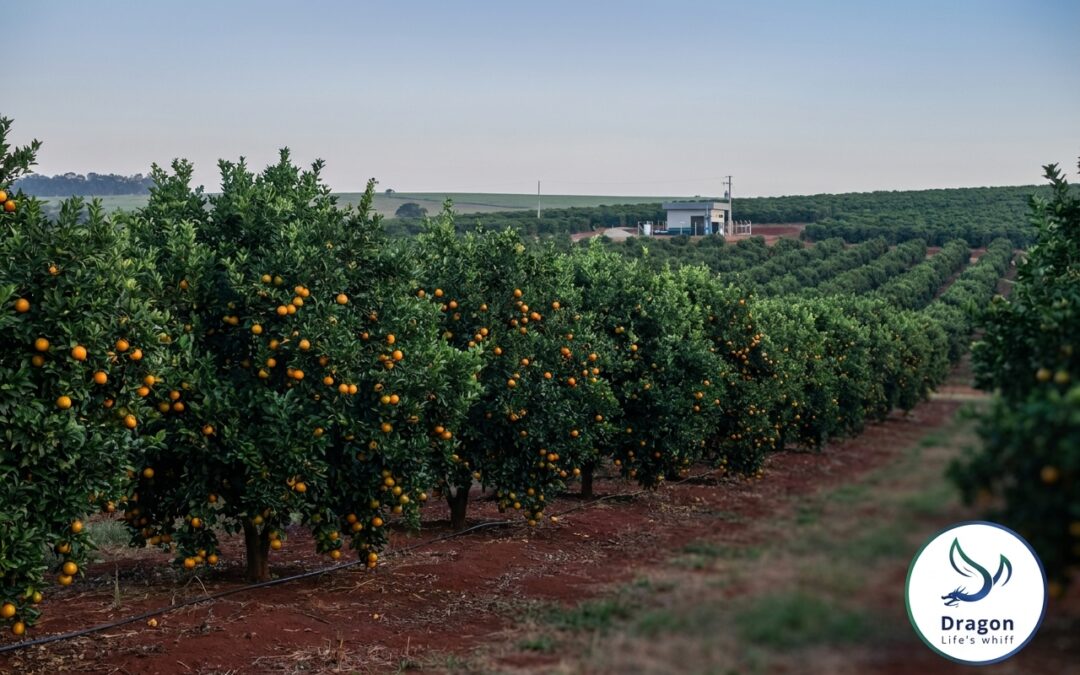
Brazil consumes about 40 million tons of fertilizer per year. Roughly 85 percent of it is imported. Supply is concentrated in a small number of mega-suppliers, mostly out of Russia, Belarus, Morocco, and China. When global commodity fertilizer markets seize up, as they did during 2022, Brazilian agriculture feels it immediately and starts looking for alternatives.
Within this commodity-dominated market, specialty fertilizer is a small segment, probably under 5 percent of total consumption. But it’s the fastest-growing segment, and it’s where the high-margin export crops live: São Paulo citrus heading to global orange juice processors, Cerrado and Sul de Minas coffee shipping to specialty roasters, premium fruit and protected-cultivation operations supplying the Brazilian middle class and growing export markets.
This article is written for the audience that buys specialty fertilizer in Brazil: corporate procurement teams at multinational ag processors, large-estate procurement managers, and import distributors evaluating supplier diversification. The agronomy matters, but the procurement decision is what gets a product into a Brazilian operation. Both are covered below.
The Brazilian procurement decision
For a procurement manager at a São Paulo-based orange juice processor’s grower network, or a large coffee estate in Sul de Minas, the fertilizer purchase decision rests on a different set of criteria than what a smallholder would evaluate:
| Procurement criterion | Why it matters for export agriculture |
|---|---|
| Contamination profile (Cl, Na, heavy metals) | EU and US import buyers test for residue; chloride-bearing K accumulates over years and degrades fruit quality |
| Traceable raw material sourcing | Required documentation for sustainability certifications and import audits |
| Consistency across batches | Variable NPK content (±15% common in commodity) breaks precision agriculture programs |
| Solubility and fertigation compatibility | Modern Brazilian orchards and estates use drip fertigation; granular product is incompatible |
| Lead times and supply chain reliability | Export crop fertilization windows are tight; late shipment means missed application |
| Packaging suited to operation scale | 5/10/20 kg paste or 25 kg powder fits estate logistics |
| Technical support and agronomic documentation | Procurement needs spec sheets, application protocols, residue documentation |
Most commodity NPK fails the first criterion. Most also fail the second. Specialty fertilizer from a manufacturer with traceable sourcing, contamination-free production, and complete technical documentation passes all seven. That’s the procurement gap Dragon’s specialty range fills.
São Paulo citrus and the orange juice supply chain
São Paulo state produces about 70 percent of the world’s orange juice supply. The processors (Cutrale, Citrosuco, Louis Dreyfus Sucos) work with thousands of grower contracts, with quality and yield specifications enforced at delivery. Brix, juice content, color, and acid balance all directly affect what the grower gets paid.
Brazilian citrus is heavily K-demanding. A productive grove producing 800 boxes per hectare removes around 200 kg of K₂O per hectare per year. Magnesium and boron are also critical. Mg deficiency shows up as interveinal yellowing on older leaves and reduced juice content. B deficiency reduces fruit set and produces small, thick-skinned fruit that doesn’t grade well.
The Brazilian citrus belt also faces three quality threats that nutrition can help manage:
- Greening (HLB). Citrus greening disease isn’t cured by fertilization, but adequate K, Zn, and Mn nutrition extends productive life of infected trees and improves fruit quality on uninfected blocks.
- Citrus canker. Improved foliar nutrition, especially K and Zn, supports plant defense responses.
- Drought stress (Cerrado expansion). Newer citrus plantings in Minas Gerais face drier conditions; biostimulant and K programs improve drought tolerance.
For Brazilian citrus, the relevant Dragon products are Dragon Paste High Potassium for fruit fill, Dragon BorCal for flowering and fruit set, Dragon Paste NPK+CaO for combined Ca-NPK delivery, and Dragon Mix Plus for Mg, Zn, and B maintenance.
Cerrado and Sul de Minas coffee
Brazil produces about 35 million 60-kg bags of coffee per year, almost a third of global output. The geography splits into two main zones. The traditional Sul de Minas mountain country (Mantiqueira de Minas, Mogiana) produces some of Brazil’s highest-quality specialty cups. The Cerrado plateau (Cerrado Mineiro) handles mechanized, high-yield production on Latosol soils.
Cerrado Latosols are deeply weathered, naturally low in fertility, and acidic (pH 4.5 to 5.5). Decades of liming and intensive fertilization have transformed them, but they still carry specific nutritional weaknesses:
- Phosphorus fixation by iron and aluminum oxides, similar in mechanism (though not as severe) to Colombian Andisols.
- Zinc and boron deficiencies widespread, with measurable yield impact at flowering.
- Potassium leaching during the wet season, especially on sandy phases.
- Magnesium deficiency on intensively cropped blocks.
The Dragon products that map to this profile: Dragon PK Humic for P efficiency on acidic Latosols, Dragon Paste Balanced and Dragon Paste High Potassium for the seasonal NPK program, Dragon Mix Plus for Zn, B, and Mg corrections, and Dragon Sea for stress recovery during Brazilian drought cycles.
For premium specialty-grade coffee operations, especially in the Mogiana and Mantiqueira regions producing 84+ point cups, the chloride-free positioning matters. Chloride in K fertilizer correlates with bitter cup defects and reduced bean development quality.
What Brazilian procurement teams ask for
Most Dragon inquiries from Brazil come from procurement professionals, not farmers. The questions they typically open with:
- What’s the contamination profile (Cl, Na, heavy metals, organic contaminants)?
- What’s the raw material source documentation?
- Can you ship to Santos or Paranaguá ports?
- What are the lead times from Jordan to Brazilian ports?
- What packaging options work for a 500-hectare estate operation?
- Do you have agronomic documentation in Portuguese?
- What are the volume-pricing tiers?
Dragon’s specialty positioning is built for this audience. The Jordan Potash and Phosphate raw material source is documented and traceable. The contamination-free production specs are verifiable. Packaging is available in 5/10/20 kg paste, 10/25 kg soluble powder, and 1/5/20 L liquid. Shipping routes to Santos and Paranaguá are established.
The specialty fertilizer ROI economics and the foliar fertilization technical detail both translate directly for Brazilian premium-segment operations. For Brazilian procurement teams, import distributors, or large-estate operations evaluating specialty fertilizer suppliers, the contact page is the route in. The full product catalog covers all six lines, and the about page covers Dragon’s manufacturing operation and Jordan raw material sourcing.
Frequently asked questions
Why would a Brazilian operation buy imported specialty fertilizer when domestic and Russian or Moroccan supply is cheaper?
The cheaper supply is commodity NPK with measurable chloride, sodium, and heavy metal content, and with ±15% NPK variance between batches. For export-grade citrus or specialty-grade coffee, those contaminants and that variability degrade the product quality the grower gets paid on. The per-ton premium for specialty fertilizer is recovered through grade-up improvements and quality compliance with the importing market. The math favors specialty for any operation supplying export channels.
Does Dragon supply directly to Brazilian growers or only through distributors?
The standard model is through import distributors and large-estate procurement channels. Dragon ships to Santos and Paranaguá ports, then distribution flows through Brazilian agricultural input chains to grower customers. Direct supply to very large estate operations is possible depending on volume and logistics.
Are Dragon products suitable for Brazilian organic citrus and coffee operations?
The Dragon Organic line is a curated subset of products from the Specialty and Minor Elements categories, designed for organic-compatible production. Products like Dragon Mix, Dragon Sea, Dragon HV15, and Dragon PK Humic fit organic-certified operations. For specific Brazilian organic certification requirements, contact the export team for documentation review.
What’s Dragon’s position on Latosol soils typical of Cerrado coffee?
Latosols share some properties with Colombian Andisols (acidic, with P-fixation issues) but differ in being older, more uniformly weathered, and generally lower in organic matter. The Dragon products most relevant for Latosol coffee are Dragon PK Humic (P efficiency), Dragon Mix Plus (Zn and B corrections), and the Dragon Paste line for the seasonal NPK program. Liming remains essential for severely acidic Latosols.
What documentation does Dragon provide for Brazilian import and certification?
Standard documentation includes technical specification sheets, contamination analysis reports, raw material sourcing documentation, shipping and customs paperwork for Santos/Paranaguá entry, and agronomic application protocols. For specific Brazilian regulatory or certification requirements (MAPA, sustainability certifications), the export team works with the importing distributor to provide what’s needed.