

A grape grower in northern Algeria once described his foliar program to me as “spray a bit of something onto the leaves and hope.” That’s how many operations treat it. It’s also why a lot of foliar programs fail.
Done well, foliar fertilization corrects deficiencies in days instead of weeks, gets nutrients into the plant when soil conditions block uptake, and stretches the value of every fertilizer dollar. Done badly, it scorches leaves, clogs sprayers, and wastes product. The difference comes down to four things: knowing when foliar makes sense, getting the spray chemistry right, mixing in the correct order, and timing the application properly.
This guide walks through all four, and shows where Dragon’s water-soluble paste, powder, and micronutrient lines fit into a real-world foliar program.
When foliar feeding is the right answer
Foliar isn’t a replacement for root-zone fertilization. Think of it as the precision tool you reach for in specific situations:
- Rapid deficiency correction. When tissue analysis comes back with a clear iron, zinc, manganese, or boron shortage and you need a response in 5–7 days, not the 3–4 weeks soil correction usually takes.
- Alkaline-soil lockup. In calcareous soils above pH 7.5 – Egyptian date palm zones, Mexican avocado regions, much of Algeria, parts of Kenya’s Naivasha cluster – iron, zinc, and manganese get bound into forms roots can’t access. Foliar bypasses that bottleneck completely.
- Stress recovery. After a heatwave, a sudden cold snap, transplant shock, or hail damage, plants need a quick metabolic boost. The root system can’t always deliver fast enough.
- Critical reproductive moments. Boron and calcium at flowering. Potassium at fruit fill. These windows are short, and a foliar spray drops the nutrient exactly where it needs to be.
- Damaged or compromised roots. Salinity, nematode pressure, or saturated soils all reduce root uptake. Foliar keeps the plant fed while you address the underlying problem.
- Soilless and hydroponic systems. Substrate-grown crops like Peruvian blueberry or Kenyan greenhouse roses already get most nutrition through fertigation, but foliar handles the rapid micronutrient corrections that substrate buffering can’t.
If none of those apply, foliar is probably just a cost. Root-zone feeding through a water-soluble fertilizer program is more efficient for sustained, day-to-day nutrition.
The chemistry of a spray solution
The single biggest reason foliar applications underperform is that growers don’t pay attention to what they’re spraying. Three numbers matter most: pH, EC, and water hardness.
Leaves absorb nutrients through the cuticle and through stomata, and both pathways prefer a slightly acidic environment. Most municipal and well water sits at pH 7.5–8.5, which is wrong. High bicarbonates make it worse. The result is precipitation in the tank, clogged nozzles, and nutrients that never make it into the leaf.
Target ranges for a foliar spray solution:
| Parameter | Target range | Why it matters |
|---|---|---|
| pH | 5.5 – 6.5 | Maximizes leaf cuticle absorption; prevents in-tank precipitation |
| EC | 0.8 – 2.5 mS/cm | Above 3.0 risks leaf burn, especially on young foliage |
| Bicarbonate | < 100 ppm | High HCO₃⁻ neutralizes acidifiers and precipitates Ca/Mg |
| Water temperature | 15 – 25 °C | Cold water reduces salt solubility |
| Hardness (Ca + Mg) | < 150 ppm CaCO₃ | Hard water binds nutrients before they reach the leaf |
Dragon Paste handles much of this on its own. The line is formulated at pH 2.5, so a dose dropped into alkaline irrigation water actively pulls the solution into the right range without a separate acidifier. For growers in calcareous-soil regions, that’s one less tank step and one less product to source.
Tank mixing – the rules nobody reads until something goes wrong
Most foliar failures aren’t chemistry mysteries. They’re mixing-order mistakes. Calcium nitrate dumped into a tank with phosphates produces an instant white precipitate that ruins both products. Sulfates behave the same way. Once you’ve watched a 500-litre tank turn cloudy ten minutes before a planned spray, you don’t make the mistake twice.
The order that works:
- Fill the tank to half capacity with clean water.
- Adjust pH first to the 5.5–6.5 range. Dragon Paste corrects pH on its own; for soluble powders, use a citric or phosphoric acid corrector if your water is alkaline.
- Add chelated micronutrients next. Dragon Iron 10%, Zinc 13%, Manganese 13%, or Copper 12%. Let them fully dissolve.
- Add water-soluble NPK (Dragon Fert soluble powder or Dragon Paste). Mix until clear.
- Add biostimulants (Dragon Sea, Dragon HV, Dragon Boost).
- Add adjuvant or sticker last. Dragon Stick goes in at the end so it doesn’t interfere with dissolution.
- Top up with water, agitate, and spray within 4 hours.
If you’re unsure whether two products are compatible, do a jar test. Mix them at field rates in a 1-litre jar, wait 30 minutes, and watch for cloudiness, precipitation, or separation. Five minutes of caution beats a wasted spray run.
A note on calcium and phosphates: they don’t share a concentrated tank. If your program needs both, run them in separate sprays a few days apart. Dragon PureCal and Dragon BorCal are formulated to be sprayed alone or with neutral biostimulants, not mixed with phosphate-loaded NPK.
Timing and technique
The right product in the right tank at the wrong moment still fails. Foliar uptake depends on the leaf being able to absorb, and that’s a narrow window each day.
Spray early morning or late afternoon. Stomata are open, leaf surfaces hold the spray long enough for absorption, and direct sun isn’t burning droplets onto the cuticle. The first two hours after sunrise are usually best.
Avoid windy days. Anything above 8–10 km/h sends most of the spray sideways instead of onto the crop. Drift is wasted money and a regulatory exposure.
Aim for 70%+ leaf coverage on both surfaces. Stomatal density is usually higher on the underside of the leaf, so a sprayer that only hits the top is leaving half the absorption capacity unused.
Stop spraying 2–3 hours before predicted rain. A short shower within an hour of spraying washes everything off. After three hours, most absorption has already happened.
Building a Dragon foliar program
A practical foliar toolkit for a commercial operation usually looks something like this:
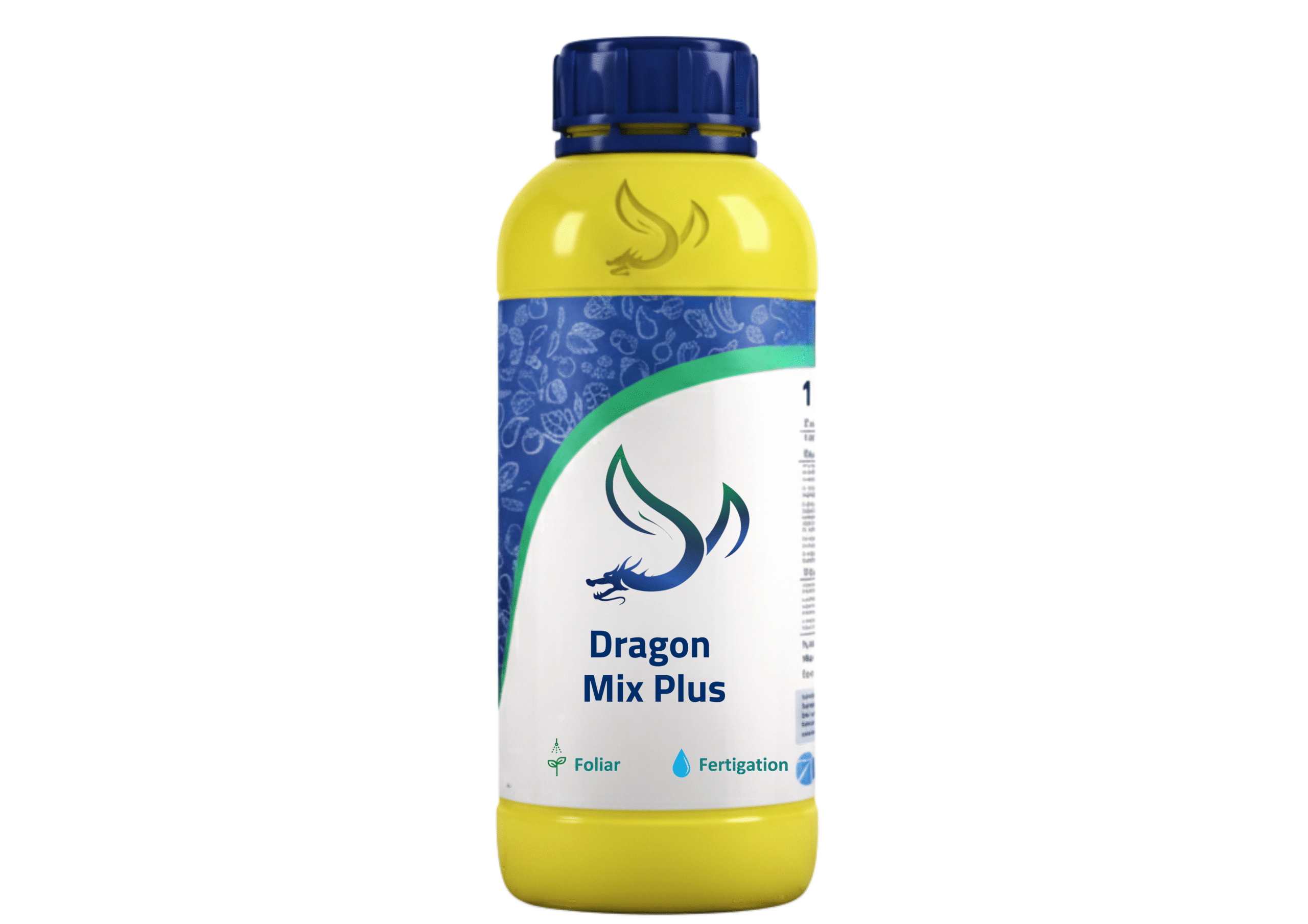
- Routine micronutrient maintenance: Dragon Mix Plus every 2–3 weeks during active growth. Covers iron, zinc, manganese, copper, and boron in one application.
- Targeted corrections: Single-element products (Iron 10%, Zinc 13%, Manganese 13%, Copper 12%) when tissue analysis identifies a specific deficiency.
- Flowering and fruit set: Dragon BorCal and Dragon PhoCal before and during bloom.
- Stress recovery and biostimulation: Dragon Sea, Dragon Boost, or Dragon Elixir after heat, cold, or transplant stress.
- Coverage and retention: Dragon Stick added to every spray to improve droplet adhesion and reduce wash-off.
For cut flower operations in Kenya, avocado growers in Mexico, and substrate-grown blueberry farms in Peru, foliar feeding isn’t optional. It’s a core piece of the production economics. Dragon’s Algerian customers have used these same products on watermelon with documented yield improvements; the field trial results are worth a look if you want to see what a well-executed foliar program delivers under difficult conditions.
Foliar is a tool. Like any tool, it works if you use it right. Match the product to the actual problem, get the tank chemistry sorted, mix in the correct order, and spray at the right moment. That’s the whole job.
If the ROI case for specialty fertilizers makes sense for your operation, foliar is usually where you get the fastest visible return. For product samples, technical advice on a specific crop, or distributor pricing, the export team is reachable at info@dragonagricultural.com or through the contact page. The full product catalog is the place to start.