
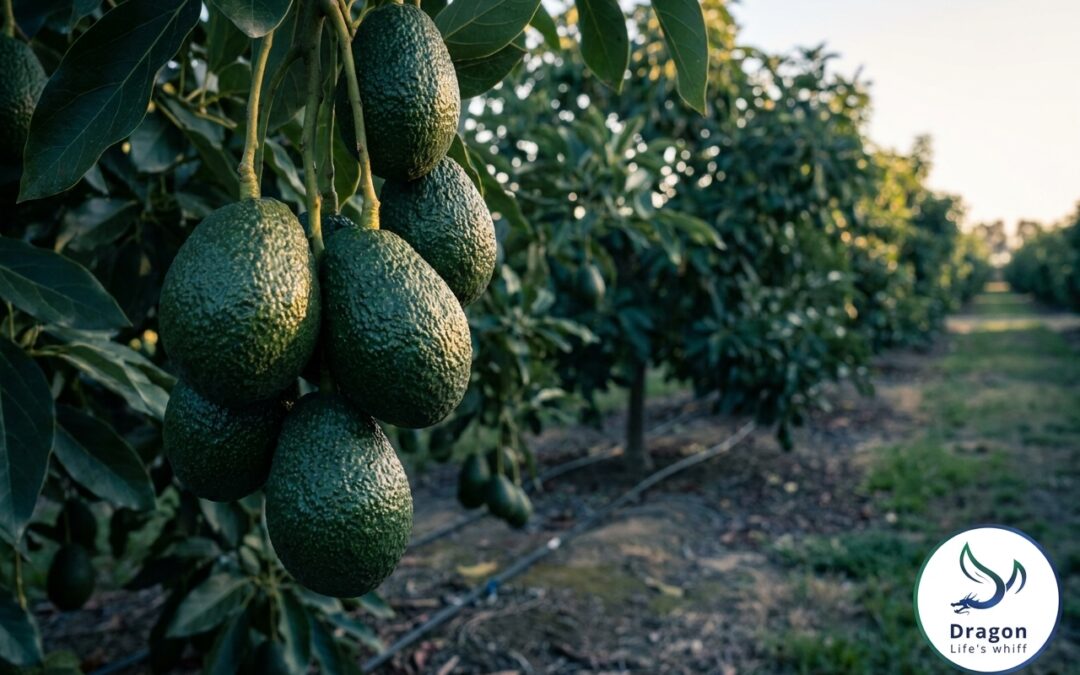
Mexican Hass avocado moves through one of the most demanding export pipelines in agriculture. From a packout in Uruapan, fruit ships 1,500 miles to a US distribution center over 5 to 7 days in cold chain. It gets graded at the Mexican packing plant, again at the US border, and once more at the supermarket distribution center. A weakness in any of those checks rejects the pallet.
The single biggest predictor of whether fruit passes those three checks isn’t variety, it isn’t picking date, it isn’t even handling. It’s calcium nutrition during fruit fill. A Hass with adequate Ca and B during cell expansion holds firm flesh, ripens evenly, and gives the eight-day shelf life US retailers require. A Hass that didn’t get enough calcium softens unevenly, develops internal bruising, and fails at one of the inspection points.
Mexico produces about 2.4 million tons of avocado annually, roughly 30 percent of global supply. Export volume to the United States alone is over a million tons. The agronomy that makes this work, and the role of specialty fertilizers in protecting that export-grade fraction, is the subject of this article.
The export-quality math
Most Mexican avocado from Michoacán and Jalisco is destined for export. APEAM certification controls who can ship to the US. USDA inspection at the border controls what gets through. Supermarket buyers control which lots get accepted at the DC. Each checkpoint has its own rejection criteria, and most of them trace back to nutrition during the fruit fill window.
| Rejection cause | Frequency at packout | Nutritional driver |
|---|---|---|
| Soft flesh, premature ripening | Common | Calcium deficiency during fruit fill |
| Internal bruising | Common | Calcium deficiency, water stress |
| Small or undersized fruit | Moderate | Inadequate K during fruit expansion |
| Ringneck, deformed fruit | Moderate | Boron deficiency at flowering |
| Color irregularities | Less common | Mn, Zn micronutrient imbalance |
| Chloride leaf burn (orchard symptom) | Increasing | Chloride accumulation from KCl use |
A typical Michoacán orchard might run 75 percent export grade in a normal year. The gap between that and 85 percent is worth roughly $1.20 per kilogram in revenue, which on a 12-ton-per-hectare orchard is around $1,440 per hectare per year. That gap is what specialty nutrition pays for.
Why avocado is chloride-sensitive
Avocado is one of the most chloride-sensitive commercial fruit trees. Leaf chloride above 0.25 percent triggers visible leaf-tip burn. Above 0.5 percent, you see reduced fruit set and premature leaf drop. Most commodity potassium fertilizer is potassium chloride, which means every season a chloride-fertilized orchard adds chloride to the system that the trees can’t excrete fast enough.
The damage builds slowly. Years one and two look fine. Year three shows scattered leaf burn. Year four shows reduced yield. Most growers blame weather or variety drift before tracing it back to the cumulative chloride.
Dragon Paste, Dragon Fert soluble powder, and the rest of the line are completely free of chloride, sodium, and heavy metals. For a Mexican avocado orchard already showing chloride stress, switching to a chloride-free K source is the single most consequential fertilizer change you can make. The cumulative damage stops on the day of the switch, and recovery is visible by the following bloom cycle.
The calcium-boron program for fruit set and fill
Calcium uptake in avocado is xylem-driven. It moves with the transpiration stream, which means most calcium loading happens during periods of active water flow. For a Michoacán orchard, that’s early bloom through May fruit set, and again during the April to June fruit expansion window. Calcium applied through fertigation during these windows reaches the fruit. Calcium applied at other times mostly accumulates in leaves and is largely wasted.
Boron supports two things: pollen viability at flowering, and the fruit-set ratio after pollination. Without adequate boron, avocado produces fewer fruit per inflorescence and a higher fraction of “ringneck” or deformed fruit that gets culled.
The combined Ca-B program through the reproductive cycle:
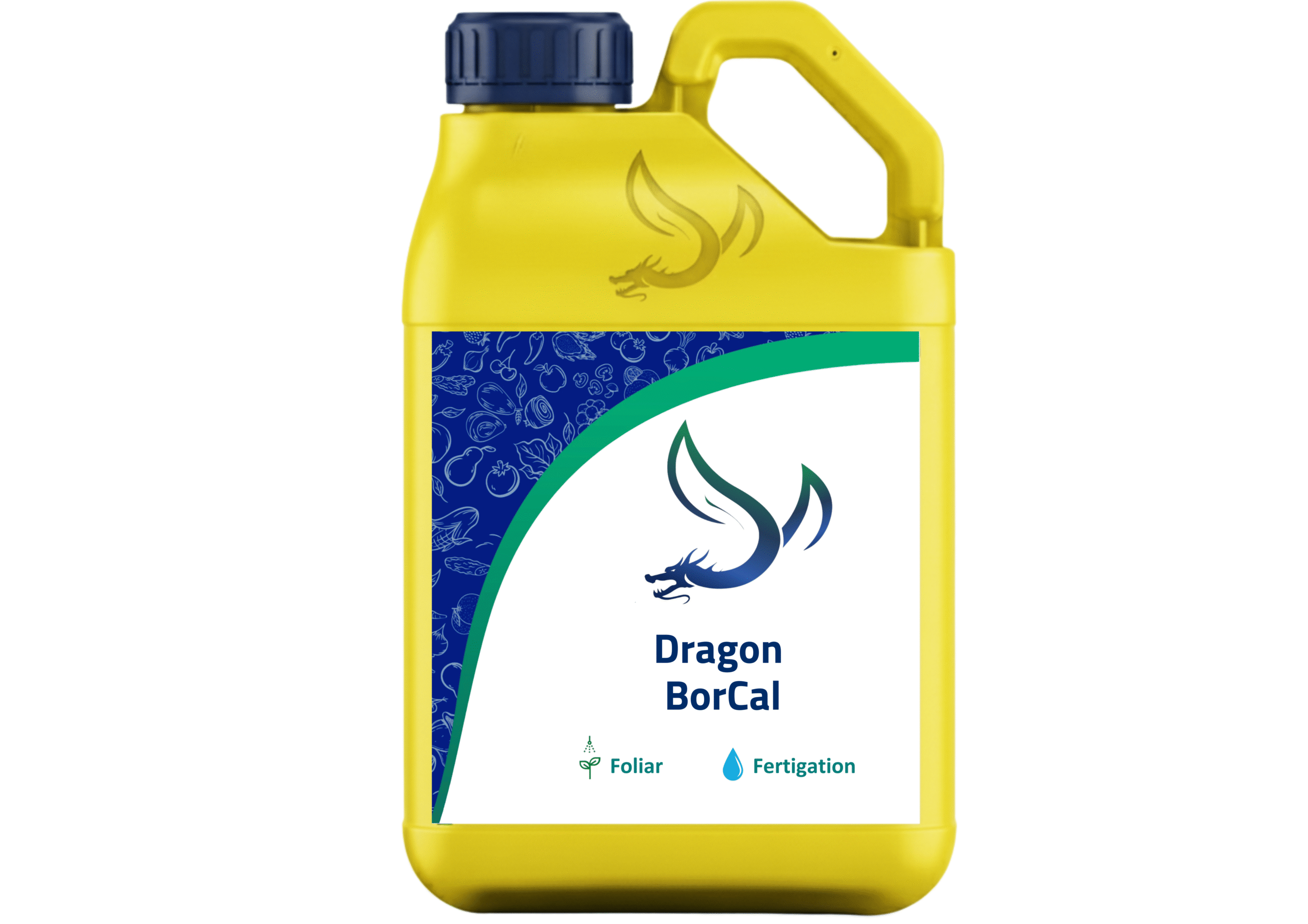
- Pre-bloom (Jan-Feb): Dragon Paste Balanced at maintenance rate, with Dragon BorCal foliar to load boron into floral buds.
- Flowering (Feb-Mar): Dragon Paste High-PK for energy reserves, with continuous foliar Dragon BorCal during bloom.
- Fruit set and early development (Mar-May): Dragon PureCal through drip fertigation, two to three doses per week. This is the highest-leverage window in the entire season.
- Fruit expansion (May-Jul): Continue Dragon PureCal or shift to Dragon Calibo for combined Ca and B. Add Dragon Paste High Potassium for oil accumulation.
- Pre-harvest and harvest (Jul-Sep): Sustained K, reducing N. Dragon Paste High Potassium at declining rate.
- Post-harvest (Oct-Dec): Dragon Paste Balanced plus Dragon PK Humic to rebuild reserves and break the alternate-bearing cycle.
The post-harvest application matters more than most growers realize. Avocado is famous for alternate bearing, where a heavy “on” year is followed by a light “off” year. The mechanism is reserve depletion. A heavy crop strips the tree’s stored carbohydrates and nutrients, leaving inadequate reserves for the following season’s flowering. A serious post-harvest fertilization program, especially with K and Mg restoration, smooths year-to-year yield variability and converts an “on/off” pattern into a more consistent producer.
High-density orchards and precision fertigation
The newer Mexican Hass plantings, especially in Jalisco where US export access opened in 2022, are increasingly high-density (500 to 800 trees per hectare versus the traditional 200 to 300). High-density orchards demand precision fertigation. Bulk broadcasting wastes inputs, and the cumulative chloride and sodium problem that traditional orchards developed over 30 years can show up in high-density blocks within five.
Dragon Fert soluble powder and Dragon Paste are both designed for fertigation. The water-soluble formulation eliminates emitter clogging. The pH 2.5 of Dragon Paste manages the bicarbonate scale common in well water across Michoacán. And the contamination-free formulation prevents the slow chloride accumulation that destroys older orchards.
For the foliar program details on the spray side, and the broader specialty fertilizer ROI economics, those articles cover the underlying logic. For Mexican avocado operations or input distributors serving Michoacán and Jalisco, the contact page is the route in. The full product catalog covers all six lines.
Frequently asked questions
What’s the most common cause of avocado export rejection at the US border?
Soft flesh and internal bruising are the dominant causes, and both trace back to inadequate calcium nutrition during fruit fill. A continuous Ca program through fertigation during the March to June window, using Dragon PureCal or Dragon Calibo, is the most effective intervention. Foliar Ca alone doesn’t work because calcium has to move up through the xylem with the transpiration stream.
Why is chloride such a problem for Mexican avocado specifically?
Avocado is one of the most chloride-sensitive commercial fruit trees. Cumulative chloride from years of potassium chloride fertilization shows up as leaf burn, reduced fruit set, and yield decline. Most Mexican orchards using commodity NPK have measurable chloride leaf burn by year three or four. Dragon’s chloride-free formulations stop the accumulation immediately, with visible orchard recovery starting in the first bloom cycle after the switch.
Can nutrition reduce alternate bearing in Hass avocado?
It helps significantly. Alternate bearing is driven by reserve depletion in “on” years that leaves insufficient reserves for the following bloom. A serious post-harvest fertilization program (October through December in Michoacán) using Dragon Paste Balanced plus Dragon PK Humic rebuilds the K and Mg reserves and reduces the “on/off” swing. It doesn’t eliminate alternate bearing entirely, but it smooths the curve.
Are Dragon products approved for use on APEAM-certified orchards?
Dragon products are free of chloride, sodium, and heavy metals, with traceable raw material sourcing from Jordanian Potash and Phosphate reserves. For APEAM and USDA-export compliance, this contamination-free positioning supports rather than complicates certification. For specific input-certification documentation, contact the export team via the contact page.
Which Dragon products are most relevant for high-density Hass orchards in Jalisco?
The fertigation-compatible lines: Dragon Paste, Dragon Fert soluble powder, and Dragon Liquid for the NPK base. Dragon PureCal and Dragon Calibo for the calcium program. Dragon BorCal for flowering and fruit set. Dragon Mix Plus for routine micronutrient maintenance. Dragon PK Humic for post-harvest reserve restoration. The combination covers the full reproductive and vegetative cycle without any chloride or sodium load.